
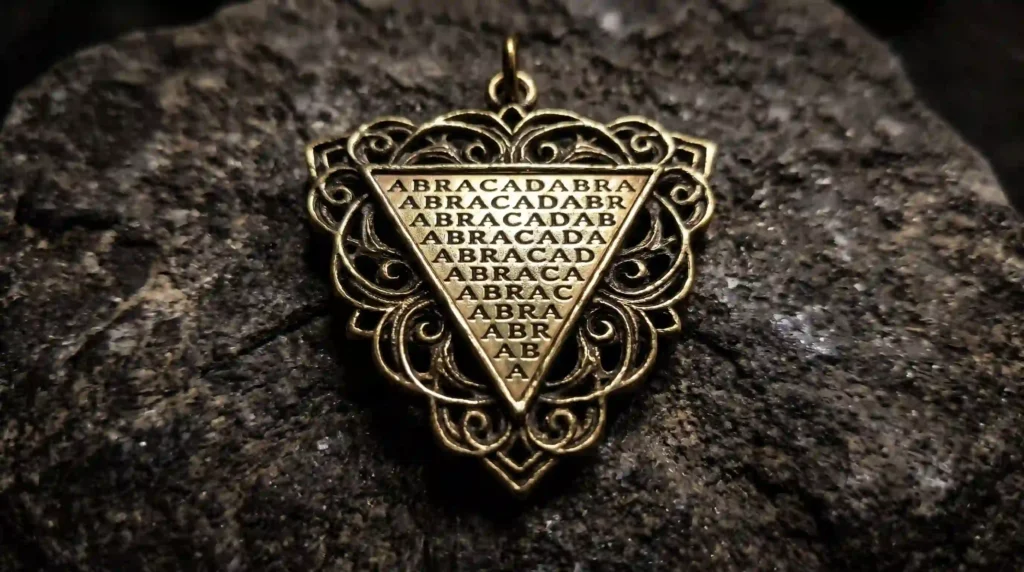
Abracadabra is one of the world’s most recognizable magical words, but its documented history is far stranger than the stage magician’s catchphrase we know today. Long before it became a theatrical exclamation, it appeared in a Roman-era medical text as a written charm intended to make fever disappear.
The original use, the uncertain origin of the word, and the meanings attached to it today are three different questions. Separating them reveals a much more interesting piece of occult history.
The Ancient Origins of Abracadabra
The earliest surviving written attestation appears in Liber medicinalis, a Latin poem on remedies traditionally attributed to Quintus Serenus Sammonicus and commonly dated to around AD 200. Its precise date and authorship are not beyond dispute. The passage prescribes the word as an amulet against a recurring fever, rather than as a spoken formula for creating something out of nothing.
Readers can examine the Latin passage and commentary at Dickinson College, including the instructions to write and wear the charm.
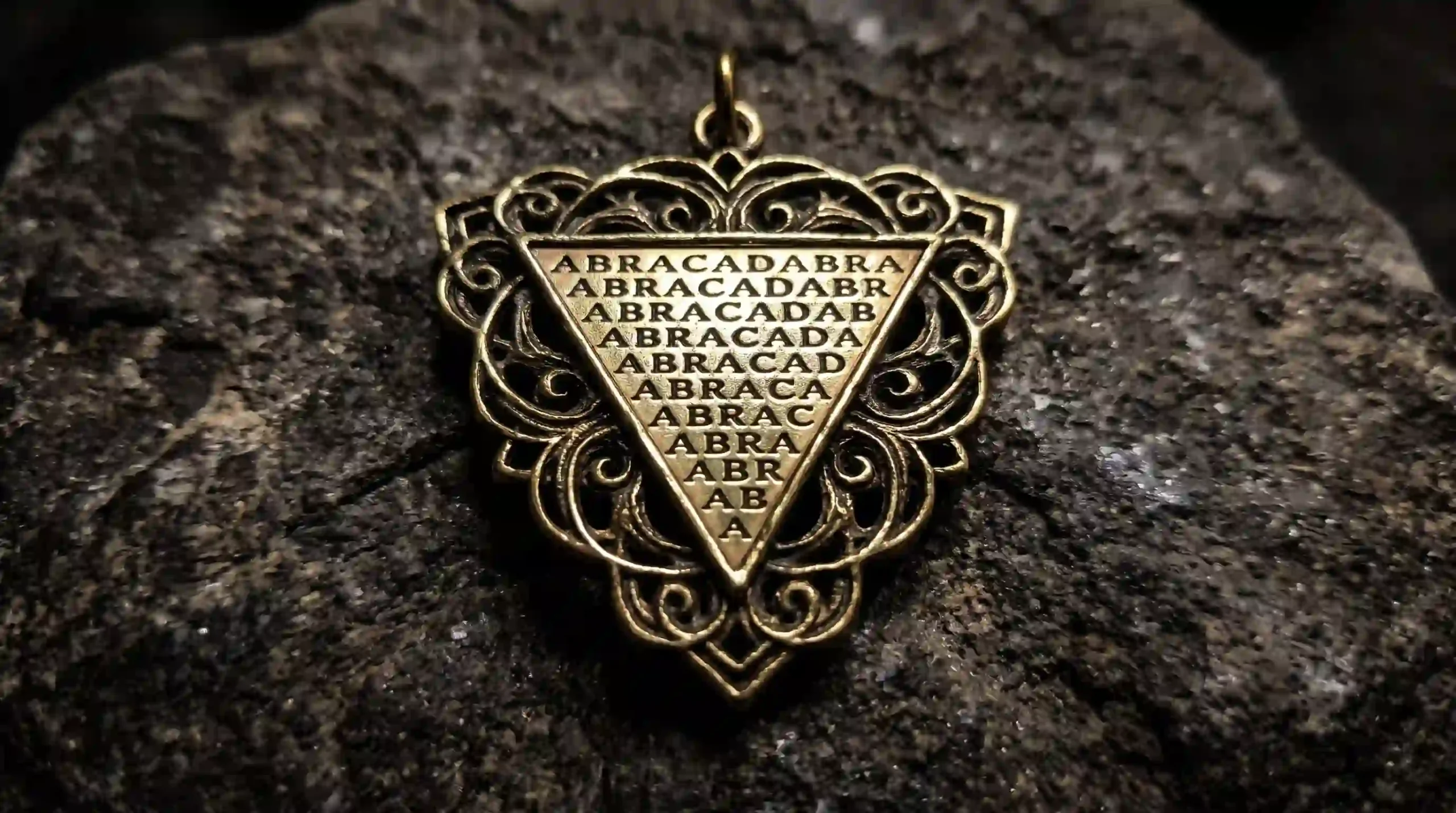
The Diminishing Triangle: How the Charm Was Used
The prescription called for a sequence of progressively shorter versions of the same word, removing the final letter one line at a time until only a single A remained:
ABRACADABRA
ABRACADABR
ABRACADAB
ABRACADA
ABRACAD
ABRACA
ABRAC
ABRA
ABR
AB
A
In the ancient instructions the inscription was attached to the body as an amulet. The text also describes a period of wearing it and subsequent disposal. This was not an instruction for a stage performance: it was part of a ritual remedy against fever.
The shrinking letters invite an interpretation of sympathetic diminution. As the word decreases, so the undesirable condition is supposed to decrease. That interpretation helps explain the ritual logic, although it should not be confused with a medically demonstrated effect. The text documents a historical belief and prescription, not evidence that the formula cured disease.
Written Magic Was More Than Spoken Incantation
Modern audiences often imagine magical language as something shouted aloud. Ancient ritual cultures also treated written words as operative objects. Inscribed formulas could be worn, carried, deposited, destroyed, or otherwise handled as part of a working. The placement of letters and the physical treatment of their medium could matter as much as pronunciation.
Abracadabra belongs to that world of amuletic practice. Its visual arrangement was not an incidental decoration. The changing shape was central to how the charm was presented.
Does Abracadabra Mean “I Create as I Speak”?
The popular claim that Abracadabra literally means “I create as I speak” is frequently linked to proposed Hebrew or Aramaic expressions. It is appealing, particularly in contemporary spiritual teachings about intention, manifestation, and the power of language. But it is not a securely established historical translation.
Different writers have suggested Semitic roots, connections to the magical name Abraxas, and other explanations. None has established a universally accepted etymology. The responsible conclusion is that the word’s ultimate linguistic origin is unresolved.
That does not prevent modern practitioners from giving the expression their own symbolic interpretation. It does mean that a contemporary interpretation should not be passed off as proof of what Roman-era users originally intended.
From Fever Amulet to Stage Magician’s Catchphrase
In popular culture, Abracadabra has come to signal a sudden theatrical change: a rabbit appearing, an object vanishing, or a performer revealing a trick. Its association with conjuring and stage entertainment was firmly established by the nineteenth century.
That later usage is culturally real, but it does not overwrite the ancient evidence. The earliest surviving account describes a carefully arranged written charm, while modern audiences usually encounter a spoken word announcing spectacle.
Removal Versus Creation: Two Very Different Meanings
There is an instructive contrast here. The early ritual suggests removal: fever is to lessen as the letters lessen. A popular modern spiritual interpretation emphasizes creation: the speaker supposedly brings an intention into being through words.
Neither the history nor the etymology allows us simply to declare the second idea the original meaning. These are different traditions of interpretation attached to the same famous word.
Why Accurate Occult History Matters
Magical practices change over centuries. A healing formula may become a popular entertainment word and later acquire a new metaphysical explanation. Tracking those changes does not diminish occult study. It clarifies what we can actually document.
At SCG Witchery, that distinction also informs how we discuss professional witchcraft spells: ritual purpose, structure, and historical claims deserve to be described precisely rather than treated as interchangeable.
What Is the Actual Meaning of Abracadabra?
The most defensible answer depends on the question being asked. Its earliest documented use was as a written protective or healing charm against fever. Its literal linguistic derivation is uncertain. Its modern cultural meaning is commonly associated with stage magic, while some spiritual writers also use it to symbolize creative speech.
Abracadabra’s history is more compelling than a convenient translation. It shows how a ritual word can travel from an ancient medical-magical prescription into theatrical performance and modern spirituality, carrying new meanings along the way.
Historical note: This article discusses a traditional ritual remedy as a matter of occult history. It is not medical advice or evidence that amulets treat illness.