
Understanding the Norse God’s and Their Legacy
Norse mythology is more than just a collection of ancient stories from the icy reaches of Scandinavia; it is a complex tapestry of honor, sacrifice, and the inevitable cycle of destruction and rebirth. At the heart of this world are the Norse God’s, a pantheon of powerful, flawed, and deeply human-like deities who ruled the Nine Realms from their halls in Asgard and Vanaheim.
In this guide, we will explore who these gods are, the fundamental concepts they represent, and why their stories continue to resonate in modern global culture.
The Two Tribes: Aesir vs. Vanir
Before diving into individual figures, it is essential to understand that the Norse God’s are primarily divided into two groups:
- The Aesir: Based in Asgard, these are the gods most often associated with war, government, and the sky.
- The Vanir: Originally from Vanaheim, these deities are linked to fertility, nature, and the ability to see the future.
Following a prehistoric war, the two groups merged, creating the unified pantheon we recognize today.
Who Are the Major Norse God’s?
Each deity in the Norse tradition serves a specific purpose and embodies distinct aspects of the human experience.
Odin: The Allfather
Odin is the highest of the Norse God’s. He is the god of wisdom, poetry, war, and the runic alphabet. Unlike the “righteous” gods of other mythologies, Odin is a seeker of knowledge at any cost—famously sacrificing one of his eyes to drink from the Well of Mimir and hanging himself from the world tree, Yggdrasil, to learn the secrets of the runes.
- Represents: The relentless pursuit of wisdom and the heavy burden of leadership.
Thor: The Protector of Mankind
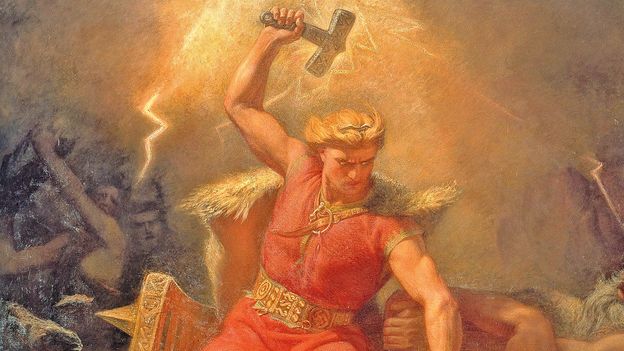
In Norse Mythology perhaps the most famous of all Norse God’s, Thor is the son of Odin and the defender of Midgard (the human world). Armed with his hammer, Mjölnir, he is the god of thunder, strength, and lightning.
- Represents: Loyalty, physical prowess, and the protection of the common people against the forces of chaos (the Giants).
Freyja: The Golden Goddess
A member of the Vanir, Freyja is the goddess of love, beauty, and fertility, but she is also a formidable leader of the Valkyries. She claims half of those slain in battle for her field, Fólkvangr.
- Represents: Female agency, the intersection of love and war, and the practice of Seiðr (magic).
Loki: The Catalyst of Change
While often called a “god,” Loki is technically the son of a giant, though he lives among the Aesir. He is the trickster, a shapeshifter who often gets the gods into trouble—and just as often uses his wit to get them out of it.
- Represents: Chaos, innovation through subversion, and the necessary friction that leads to growth (and eventually, the end of the world).
What the Norse God’s Represent
Norse Mythology is unique because the gods are not immortal. They are destined to die at Ragnarök. This mortality shapes what they represent to the people who worshipped them:
- Fate (Wyrd): Even the Norse God’s are subject to the laws of fate. This mirrors the Viking belief that one cannot change their end, only how they face it.
- Dualism of Nature: The gods represent the struggle between civilization (Asgard) and the wild, untameable forces of nature (the Jötunn or Giants).
- Sacrifice: Almost every major myth involves a god giving something up—an eye, a hand, a child—to maintain order or gain power.
How We View the Norse God’s Today
In the 21st century, the Norse God’s have transitioned from figures of religious worship to icons of global pop culture. However, the modern view is often a blend of historical truth and creative reimagining.
Pop Culture and Media
From the Marvel Cinematic Universe to the God of War video game series and the show Vikings, Norse mythology is a staple of modern entertainment. These versions often emphasize the “superhero” aspects of Thor or the “villainous” aspects of Loki, sometimes veering far from the original poetic sources.
Modern Neopaganism
For some, the Norse God’s are more than just stories. Modern Heathenry and movements like Ásatrú have seen a revival. These practitioners look to the ancient texts (The Poetic and Prose Eddas) to reconstruct the values of the Viking Age—such as courage, truth, and hospitality—in a modern context.
Archetypal Influence
Psychologists, following the lead of Carl Jung, often view the Norse God’s as archetypes of the human psyche. Odin represents the seeker, Thor the protector, and Loki the shadow self. This perspective explains why these ancient figures still feel relevant to our personal lives today.
The Enduring Significance of Norse Mythology
in Norse Mythology the Norse God’s offer a mirror to the human condition. They are powerful yet vulnerable, wise yet impulsive. Whether you are interested in them as historical artifacts, literary symbols, or cultural icons, their stories provide a profound look at how humanity perceives power, fate, and the world around us.
Explore More About Norse Mythology:
- The Story of Ragnarök: The End of the World
- Understanding the Nine Realms of Yggdrasil
- A Guide to Viking Runes and Their Meanings