
Table of Contents
Lilith: From Ancient Demon to Modern Symbol of Empowerment
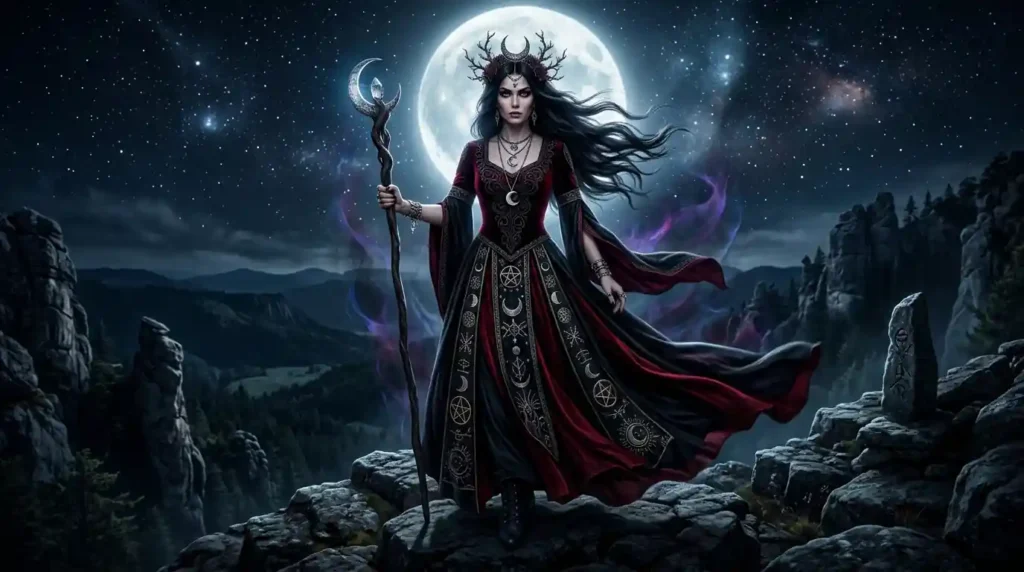
No figure in the history of Western mythology has undergone a more dramatic transformation than Lilith. Over four millennia, she has been reinvented by every culture that encountered her — from a class of Mesopotamian wind spirits feared by Sumerian priests, to a demonic succubus dreaded by Talmudic rabbis, to a rebellious first wife exiled from Eden, to a Kabbalistic queen of darkness, and finally to one of the most powerful symbols of feminine empowerment in the modern spiritual landscape.
This is not a story of mistaken identity or cultural confusion. It is a story about what happens when a mythological figure becomes a mirror — reflecting back to each era its deepest anxieties, its most forbidden desires, and its most radical possibilities.
This article traces Lilith’s complete transformation from ancient demon to modern archetype, examining the specific cultural moments that reshaped her identity, her extraordinary presence in Western art and literature, her role in feminist theology and politics, her significance in contemporary occult and spiritual practice, and the practical correspondences and safety protocols for those who choose to work with her energy today.
For readers new to Lilith’s story, this article builds upon two companion pieces: The Mesopotamian Origins of Lilith: Separating Fact from Fiction, which covers the archaeological and cuneiform evidence for the earliest lilītu spirits, and Lilith in Biblical Texts: Uncovering Ancient Truths, which examines every major reference from Isaiah through the Zohar.
The Historical Arc: 4,000 Years in Summary
Before examining each phase of Lilith’s transformation in detail, it helps to see the entire arc at a glance:
| Era | Lilith’s Identity | Cultural Function |
|---|---|---|
| Sumerian/Akkadian (c. 3000-1000 BCE) | Class of wind/night spirits (lilītu) | Explaining disease, nocturnal threats, sexual anxiety |
| Biblical (c. 700-200 BCE) | Ambiguous lilit — night creature or demon | Symbol of divine desolation and judgment |
| Talmudic (c. 200-600 CE) | Named succubus — winged, long-haired, predatory | Warning against male vulnerability and sexual sin |
| Medieval (c. 700-1300 CE) | Adam’s rebellious first wife | Explaining Genesis contradictions; cautionary tale for women |
| Kabbalistic (c. 1200-1600 CE) | Cosmic force of evil — consort of Samael | Mapping the metaphysical structure of evil |
| Romantic/Victorian (c. 1800-1900) | Femme fatale — dangerous beauty | Expressing male anxiety about female sexuality and independence |
| Feminist (c. 1970-present) | Symbol of female autonomy and equality | Reclaiming women’s power from patriarchal demonization |
| Contemporary Spiritual (c. 1990-present) | Dark Goddess — divine feminine archetype | Personal empowerment, shadow work, sexual sovereignty |
Each of these transformations built upon the previous ones, but each also fundamentally changed the meaning of the figure. The Lilith of modern witchcraft would be unrecognizable to the Mesopotamian priests who first inscribed her name on clay tablets — and yet every layer of her story contributes to the figure practitioners encounter today.
Traditional Sources: The Foundation of the Myth
Mesopotamian Origins
The earliest verifiable references to Lilith-type spirits appear in cuneiform texts dating to approximately 3000 BCE. The Akkadian lilītu was not an individual personality but a class of female wind demons — part of a broader demonic family that included lilû (male), lilītu (female), and ardat lilî (“young woman spirit”).
These spirits were associated with storms, dangerous winds, disease, and sexual predation. They inhabited liminal spaces — ruins, deserts, and uninhabited wastelands — the boundaries between the ordered human world and the primordial chaos beyond. Sumerian texts describe lilītu as the “handmaiden of Inanna” — agents of the goddess of love, war, and fertility — who were sent “into the fields and streets in order to lead men astray.”
The most significant early narrative appears in Gilgamesh, Enkidu, and the Netherworld (c. 2000 BCE), where the ki-sikil-líl-lá-ke — the spirit scholars have connected to Lilith — dwells in the trunk of Inanna’s sacred Huluppu tree alongside a serpent and the Anzu bird. When Gilgamesh drives them out, the spirit “fearfully destroys its house and runs for the forest.”
The archaeological evidence includes thousands of cuneiform tablets preserving exorcism rituals, medical texts, and incantation formulas designed to combat líl-type demons, as well as protective amulets, incantation bowls, and the famous Burney Relief (“The Queen of the Night”) — a terracotta plaque depicting a nude, winged female figure with bird talons, standing upon lions and flanked by owls. (For the complete archaeological analysis, see The Mesopotamian Origins of Lilith.)
Jewish Textual Sources
The transformation of lilītu from a class of Mesopotamian spirits into a named personality within Jewish tradition unfolded across several key texts:
Isaiah 34:14 (c. 700-500 BCE) — The only biblical mention of lilit, appearing in a desolation prophecy against Edom. The word has been translated as “screech owl,” “night creature,” “night hag,” and “Lilith” depending on the version. The Hebrew text places lilit alongside sa’ir (goat-demons), suggesting a supernatural rather than zoological reading.
Dead Sea Scrolls, Songs of the Sage (4Q510-511) (c. 200-100 BCE) — Lists Lilith among “spirits of the destroying angels, demons, Lilith, howlers, and desert dwellers” in an exorcistic liturgy. This is the oldest clear Hebrew usage of lilith as a named supernatural entity.
Babylonian Talmud (c. 500-600 CE) — Four passages (Eruvin 100b, Niddah 24b, Shabbat 151b, Bava Batra 73a) describe Lilith as a winged female demon with long hair who targets men sleeping alone and is the mother of other demons.
The Alphabet of Ben Sira (c. 700-1000 CE) — This anonymous medieval satirical text introduced the narrative that Lilith was Adam’s first wife, created from the same earth, who refused to “lie beneath” him, uttered God’s Name, and flew from Eden. This origin story — created to reconcile the two creation accounts in Genesis 1:27 and Genesis 2:21-22 — became the most culturally influential Lilith narrative ever written.
The Zohar (c. 1280 CE) — Contains 48 references to Lilith, establishing her as the consort of Samael (the angel of death), a cosmic force within the Kabbalistic system of evil (kelipot), and “the mother of all the demons and all the evil spirits that fly about in the world.”
Lurianic Kabbalah (c. 1534-1572) — Rabbi Isaac Luria (the Arizal) placed Lilith within a triad of evil alongside Samael and Asmodeus, corresponding to sexual desire and the world of action. He summarized her nature and purpose as “the ruination of the world.”
(For the detailed analysis of every passage, see Lilith in Biblical Texts: Uncovering Ancient Truths.)
Lilith in Western Art and Literature: The Romantic Reimagining
The transformation of Lilith from a religious and demonological figure into an artistic and literary one began in earnest during the Romantic period, when European writers and painters discovered in her a vehicle for exploring the dangerous allure of feminine sexuality — a theme that both thrilled and terrified Victorian culture.
Goethe’s Faust (1808)
Lilith makes her literary debut in modern European literature in Johann Wolfgang von Goethe’s Faust, Part One, during the Walpurgis Night scene. As Faust and Mephistopheles climb through the Harz Mountains on the night of the witches’ sabbath, Faust sees a beautiful woman in the distance. Mephistopheles identifies her:
“That is Lilith.”
“Lilith? Who is that?”
“Adam’s first wife. Beware of her fair hair, for she excels all women in the magic of her locks, and when she twines them round a young man’s neck, she will not ever set him free again.”
Goethe’s Lilith is a seductress — but a specific kind. Her power resides in her beauty and her hair, and her danger lies in the permanent ensnarement of men who fall under her spell. This characterization draws on the Talmudic description of Lilith as long-haired (Eruvin 100b) and on the Kabbalistic traditions of her as a cosmic succubus, but it strips away the demonological specifics and presents her as a figure of pure erotic danger.
The Walpurgis Night scene also introduces a deliberate contrast between Lilith and Gretchen — the innocent young woman Faust has seduced and destroyed. Lilith, the demonic temptress who kills children, anticipates the revelation that Gretchen has killed her own infant. In Goethe’s symbolic framework, Lilith and Gretchen are two faces of feminine experience under patriarchy: the woman who refuses to submit (and is demonized for it) and the woman who does submit (and is destroyed by it).
Dante Gabriel Rossetti’s Lady Lilith (1866-1873)
The most iconic visual representation of Lilith in Western art is the oil painting Lady Lilith by Pre-Raphaelite Brotherhood founder Dante Gabriel Rossetti, now held at the Metropolitan Museum of Art. First painted in 1866-1868 using his mistress Fanny Cornforth as the model, then altered in 1872-73 to show the face of Alexa Wilding, the painting depicts Lilith as a luxuriously self-absorbed Victorian beauty — combing her long, flowing hair, seductively exposing her shoulders, and gazing into a mirror with an expression of absolute self-possession.
Rossetti inscribed on the original frame lines adapted from Goethe’s Faust: “Beware… for she excels all women in the magic of her locks, and when she twines them round a young man’s neck, she will not ever set him free again.” The painting was conceived as a pair with Sibylla Palmifera — Lady Lilith representing the body’s beauty, Sibylla Palmifera representing the soul’s beauty.
As art historian analyses note, Rossetti’s Lilith emerged during a period when the ancient Talmudic seductress “arose as a figure of renewed fascination in popular culture, and one who embodied societal anxieties around the changing role of women in the 19th century.” The painting captured something Victorian men both desired and feared: a woman whose beauty existed entirely for herself, whose gaze was turned inward rather than directed at a male viewer, and whose power lay precisely in her refusal to perform for others.
Rossetti’s Companion Sonnet: “Body’s Beauty”
Rossetti also composed a sonnet for the painting, titled “Body’s Beauty” (Sonnet LXXVIII from The House of Life):
Of Adam’s first wife, Lilith, it is told
(The witch he loved before the gift of Eve,)
That, ere the snake’s, her sweet tongue could deceive,
And her enchanted hair was the first gold.
And still she sits, young while the earth is old,
And, subtly of herself contemplative,
Draws men to watch the bright web she can weave,
Till heart and body and life are in its hold.
This sonnet crystallized the Romantic-era Lilith: eternal, self-contemplative, weaving enchantment not through aggression but through the simple act of being beautiful for herself. The “bright web” is her hair — a symbol simultaneously of female vanity, sexual power, and creative agency.
The Broader Artistic Legacy
Rossetti’s painting inspired a wave of Lilith imagery across Victorian and Edwardian art. The first known 19th-century painting of Lilith is believed to be by Queen Victoria’s painter Richard Westall, who took direct inspiration from Goethe with his 1831 painting Faust and Lilith. John Collier’s Lilith (1887) depicted her nude with a large serpent draped around her body — merging the Edenic serpent tradition with the seductress archetype.
These artistic renderings accomplished something the religious texts never had: they made Lilith beautiful, desirable, and sympathetic. In the hands of the Romantics and Pre-Raphaelites, the demonic child-killer of Talmudic tradition became a figure of tragic allure — a woman punished for her beauty and independence, imprisoned in eternal exile, dangerous only because she refused to be tamed.
Lilith in Modern Pop Culture
Lilith’s cultural penetration in the 20th and 21st centuries has been extraordinary. As catalogued by popular culture scholars, she appears across virtually every medium:
Television: Lilith serves as a major character in Supernatural (as the first demon, played by Katie Cassidy and others), The Chilling Adventures of Sabrina (merged with Madam Satan, played by Michelle Gomez), Lucifer (as the mother of Mazikeen, played by L. Scott Caldwell), and True Blood.
Literature: She appears in Cassandra Clare’s The Mortal Instruments series as the mother of demons, in C.S. Lewis’s The Chronicles of Narnia (the White Witch is described as a descendant of Lilith), and in Octavia Butler’s Lilith’s Brood science fiction trilogy. Angela Carter and Toni Morrison both describe Lilith as Black, “affirming the African or Middle Eastern aspect of this woman of colour.”
Games: Lilith appears in Vampire: The Masquerade, the Diablo franchise, Darksiders, Shin Megami Tensei, and numerous other properties — almost always as either a seductive antagonist or a figure of ambiguous, forbidden power.
Music: The Lilith Fair music festival (1997-1999, revived 2010), founded by Sarah McLachlan, was explicitly named after the mythological figure and featured exclusively female and female-fronted artists. It became the top-grossing touring festival in 1997, grossing over $16 million.
The common thread across these diverse appearances is Lilith’s extraordinary narrative flexibility. As the popular culture encyclopedia TV Tropes observes: “Lilith is a pretty flexible storytelling tool, and has been variously portrayed as a Child Eater, a Woobie, Destroyer of Worlds, an Anti-Villain, an Anti-Hero, a fully-heroic feminist icon, and everything in between.”
The Feminist Reclamation: Lilith Reborn
The most consequential transformation in Lilith’s 4,000-year history began in the early 1970s, when Jewish feminist theologians recognized in the Alphabet of Ben Sira’s rebellious wife a powerful template for women’s liberation.
Judith Plaskow and “The Coming of Lilith” (1972)
The foundational text of Lilith’s feminist reclamation was written by Judith Plaskow, then a graduate student in religious studies, who in 1972 published a short midrash titled “The Coming of Lilith.” In this radical retelling, the exiled Lilith does not become a demon but instead returns to the Garden of Eden and befriends Eve. The two women discover common ground — Lilith’s story of exile and Eve’s experience of subordination — and together they begin to rebuild Eden, “bursting with possibilities, ready to rebuild it together.”
Plaskow’s midrash accomplished something revolutionary: it rejected the framework in which Lilith and Eve were adversaries (the rebel vs. the obedient wife) and recast them as allies. In Plaskow’s reading, the real villain is not Lilith or Eve but the patriarchal system that defined one as a monster and the other as property.
Plaskow went on to become one of the most influential Jewish feminist theologians of the 20th century, publishing Standing Again at Sinai: Judaism from a Feminist Perspective (1990), a work that built on the theological foundations laid in her Lilith midrash to argue for a complete restructuring of Jewish worship, community, and God-language.
Lilith Magazine (1976-Present)
In 1976, the same year Ms. Magazine was transforming mainstream feminism, a group of Jewish women launched Lilith magazine — “independent, Jewish, and frankly feminist.” The choice of name was deliberate and provocative: by adopting the name of the figure Jewish tradition had demonized as the ultimate bad woman, the magazine’s founders were making a theological and political statement about who gets to define acceptable femininity.
Since 1976, Lilith has published continuously, covering Jewish women’s lives “with exuberance, rigor, affection, subversion and style.” The Brandeis University National Committee maintains a collection documenting the magazine’s operations, including “original notebooks, correspondence, interviews, manuscripts, ephemera and a book collection, which shed light on the research and resources behind numerous Lilith articles on topics ranging from Passover Haggadahs and conversion to Judaism, to the Israeli feminist movement and women’s health.”
The magazine’s longevity — nearly 50 years of continuous publication — demonstrates that the feminist Lilith is not a passing trend but a durable cultural identity.
What Feminist Lilith Represents
The feminist reclamation of Lilith centers on several key themes drawn from the Alphabet of Ben Sira narrative:
Equality of creation: Lilith and Adam were both formed from the earth — making them ontologically equal. Lilith’s insistence on this equality (“Why should I lie beneath you, for we were both created from dust?”) becomes a founding statement of gender egalitarianism.
The right to refuse: Lilith’s flight from Eden is recast not as demonic rebellion but as the exercise of bodily autonomy. She chose exile over submission — a decision that feminist readers understand as the foundational act of women’s liberation.
The cost of defiance: The patriarchal punishment for Lilith’s defiance — demonization, exile, the daily death of her children — is read as a metaphor for what happens to women who refuse to conform: they are cast out, labeled dangerous, and stripped of their maternal identity.
Naming as power: Lilith gains the power of flight by speaking God’s ineffable Name — demonstrating that access to sacred knowledge and language is itself a form of liberation. Feminist theologians connect this to women’s historical exclusion from religious education, literacy, and leadership.
Lilith in Contemporary Spiritual Practice: The Dark Goddess
Beyond academic feminism, Lilith has been adopted as an active spiritual presence by practitioners across multiple traditions — from Wiccan and neopagan paths to ceremonial magic, demonolatry, and Left Hand Path practice. The way Lilith is approached varies dramatically depending on the tradition, but certain commonalities unite most contemporary practitioners.
Lilith as Dark Goddess
In neopagan and Wiccan practice, Lilith is typically classified as a Dark Goddess — a deity associated with the shadow aspects of the psyche, the transformative power of destruction and rebirth, and the untamed forces of nature and sexuality. She is grouped alongside figures like Hecate, Kali, the Morrigan, Persephone, and Ereshkigal — goddesses who govern death, the underworld, magic, and the liminal spaces between worlds.
As the spiritual education platform Spells8 explains: “In modern-day practice, Lilith is a symbol of empowerment and resistance like many other Goddesses. Lilith has a strong connection with the history and persecution of witches. Both were seen as diabolical beings by the terrified medieval men who saw in everything the presence of an absolute principle of evil, especially when they could not dominate what was opposed to their usual place of security.”
Modern devotees typically “de-emphasize the objectified seductive, demonized, vampiric, satanic or ‘mother of demons’ aspects attributed to Lilith by the Patriarchy” and instead “awaken consciousness of her as an icon for female wholeness, consent culture, freedom and gender equality.”
Lilith in the Left Hand Path and Qliphoth
In contrast to the neopagan approach, Left Hand Path practitioners and ceremonial magicians who work with the Kabbalistic Qliphoth (the “shadow” or “husk” side of the Tree of Life) approach Lilith differently. In this framework, Lilith is not sanitized or domesticated but engaged as a powerful, potentially dangerous force of transformation.
Within the Qliphothic system, Lilith governs Gamaliel — the sphere opposite Yesod (Foundation) on the Tree of Life, associated with dark sexuality, hidden desires, and the shadow self. Experienced practitioners describe Lilith as “both a remarkable mentor and a cunning trickster, which makes her an exceptional instructor” in this context.
A common warning within Left Hand Path communities: “Many individuals get burned when engaging with Lilith because they treat her merely as a spiritual object for pleasure, which can lead to them being ensnared. A more nurturing approach, viewing Lilith as a maternal figure, tends to be much more beneficial.”
Black Moon Lilith in Astrology
Lilith has also found a significant home in modern astrology through the concept of Black Moon Lilith — a calculated point (not a physical body) marking the Moon’s farthest point from Earth in its orbit (the lunar apogee). As astrologer Chani Nicholas explains: “Black Moon Lilith in your natal chart can hint at where you tend to be defiant, untamable, and fiercely independent. It’s a subtle pulse point in your birth chart, one that signals your deepest, most authentic urges.”
The astrological Lilith reveals:
- Where you struggle to be fully seen or accepted
- Your instinctive responses around power, sexuality, and boundaries
- The parts of you that refuse to stay small, quiet, or controlled
- Where you may have experienced shame or rejection for expressing your truth
Black Moon Lilith moves on a roughly nine-year cycle and passes through all twelve zodiac signs. When it transits a significant point in your natal chart, it can activate themes of rebellion, repressed desire, confrontation with shame, and the reclamation of personal power.
There are actually three Lilith points used in astrology:
- Black Moon Lilith (Mean or True) — the most commonly used, marking the lunar apogee
- Asteroid Lilith (1181) — a physical asteroid discovered in 1927
- Dark Moon Lilith (Waldemath) — a controversial hypothetical point associated with hidden fears and karmic patterns
Together, these three Liliths form what some astrologers call “a constellation of personal truth, power, and shadow work.”
Correspondences and Offerings: Working with Lilith’s Energy
For practitioners who feel called to work with Lilith, the following correspondences have been established across multiple traditions of modern witchcraft, ceremonial magic, and devotional practice. These should be understood as guidelines drawn from both historical sources and contemporary practitioner consensus — not as rigid dogma.
Sacred Symbols
| Symbol | Significance |
|---|---|
| Owl | Isaiah 34:14 associates lilit with nocturnal creatures; owls symbolize night wisdom and liminal sight |
| Serpent | Connected to the Eden narrative; symbolizes transformation, kundalini energy, and forbidden knowledge |
| Dark Moon | Lilith’s energy aligns with the dark/new moon phase — the period of hidden power, introspection, and renewal |
| Lilith’s Sigil | The Robin Artisson Sigil of Lilith (2007) is widely used by modern devotees as a focal point for connection |
| Black Moon Lilith Glyph | The astrological glyph (crescent moon over cross) represents the dark feminine in the birth chart |
| Mirror | Connected to Rossetti’s Lady Lilith — symbolizes self-contemplation, shadow work, and inner truth |
Elemental and Material Correspondences
| Category | Correspondences |
|---|---|
| Elements | Water (primary), Air (secondary) — reflecting her Mesopotamian origins as a wind spirit associated with water as a portal |
| Colors | Black, deep red, dark purple |
| Crystals | Black obsidian, black tourmaline, tiger’s eye, amber, bloodstone, moonstone |
| Metals | Silver (lunar connection), iron (protective) |
| Scents/Incense | Jasmine, dragon’s blood, musk, sandalwood, dark rose |
| Herbs | Mugwort, wormwood, belladonna (use caution — toxic), black cohosh, damiana |
| Candle Colors | Black (primary), red (secondary — passion and blood) |
| Animals | Owls, serpents, bats, black cats, lions/lionesses |
Traditional Offerings
When establishing or maintaining a devotional relationship with Lilith, practitioners commonly offer:
- Dark wine (particularly red — the oldest offering tradition, connected to blood symbolism)
- Pomegranates (associated with the underworld, Persephone, and feminine mysteries)
- Dark chocolate (a modern offering representing sensual indulgence)
- Red apples (connecting to the Eden narrative and forbidden knowledge)
- Honey (ancient offering tradition for Near Eastern deities)
- Clay or earth (reflecting her creation from the same dust as Adam)
- Artwork or written devotion (creative offerings honoring her as a muse)
- Sexual energy (offered through focused, intentional practice — discussed further under Safety)
Altar Construction
A dedicated Lilith altar typically includes:
- Her sigil drawn or printed in black or red ink
- Images of owls, serpents, or artistic depictions of Lilith
- A scrying mirror (traditionally black) for self-reflection and spirit communication
- Dark crystals (obsidian, black tourmaline)
- A chalice or cup for wine offerings
- Black and red candles
- Symbols of the dark moon
Important: most practitioners emphasize that Lilith’s altar should be dedicated exclusively to her — not shared with other deities or spirits. She is widely described as demanding focused, undivided attention.
Safety and Practice: Essential Guidelines
Working with Lilith is not approached casually in any tradition. Whether understood as a goddess, an archetype, a demonic intelligence, or a psycho-spiritual energy pattern, Lilith is consistently described by experienced practitioners as powerful, demanding, transformative, and not suitable for beginners without adequate preparation.
Core Principles
Respect over fear: The most effective approach to Lilith, across all traditions, is one of genuine respect rather than either casual familiarity or abject terror. She responds to honesty, directness, and authenticity — not to groveling, flattery, or attempts at control.
Self-knowledge first: Lilith’s primary domain is the shadow self — the repressed desires, rejected identities, and unhealed wounds that we hide from ourselves and others. Working with her energy will surface these shadows. Practitioners should have a strong foundation in self-awareness, psychological stability, and ideally experience with shadow work before engaging with Lilith directly.
Preparation over improvisation: Every tradition that works with Lilith emphasizes the importance of thorough preparation. Improvised, spontaneous Lilith workings by unprepared practitioners are the most common source of negative experiences reported in online practitioner communities.
Sacred Timing
Lilith workings are traditionally timed to align with her nocturnal and lunar nature:
- Dark Moon/New Moon — The primary window for Lilith workings. This phase represents hidden power, introspection, banishing, and the fertile darkness from which new growth emerges.
- Midnight to 3 AM — Often called “the witching hour,” this period is most strongly associated with Lilith’s energy in both historical and contemporary practice. The Babylonian Talmud’s warning that Lilith “seizes” men sleeping alone at night reflects this ancient nocturnal association.
- Friday nights — Connected to Venus (feminine energy) and the Sabbath eve in Jewish tradition; some practitioners consider this Lilith’s sacred evening.
- Special lunar events — Full moons, black moons (second new moon in a calendar month), blood moons, and eclipses are considered especially potent for Lilith workings.
Protective Protocols
Before working:
- Cast a protective circle — Establish clear energetic boundaries before any invocation or meditation involving Lilith. The Lesser Banishing Ritual of the Pentagram (LBRP) is commonly used in ceremonial frameworks; Wiccan practitioners may use their traditional circle-casting methods.
- State your intention clearly — Lilith responds to clarity and directness. Vague, unfocused workings are more likely to produce confusing or destabilizing results. Know precisely what you are seeking — wisdom, empowerment, shadow integration, creative inspiration — before you begin.
- Ground and center — Establish a strong connection to your body and the physical world. Lilith’s energy can be intensely cerebral and dissociative; grounding counterbalances this tendency.
During working:
- Maintain awareness — Keep a journal nearby to record impressions, images, emotions, and any communications. Lilith’s messages are often subtle, arriving through imagery, sensation, and emotional shifts rather than clear verbal communication.
- Use corresponding elements — Water and Air are Lilith’s primary elements. A bowl of water on the altar, incense smoke, and attention to breath can all deepen the connection.
- Respect boundaries — If you feel overwhelmed, afraid, or destabilized at any point, end the working. Lilith respects those who respect their own limits. Powering through discomfort out of ego is the most common mistake practitioners report.
After working:
- Close formally — Thank Lilith explicitly, state that the working is complete, and close your protective circle. Do not leave the space energetically “open.”
- Ground thoroughly — Eat something, touch the earth, drink water, engage your physical senses. Lilith workings can leave practitioners in an altered state that requires deliberate re-grounding.
- Cleanse the space — Use smoke cleansing (dragon’s blood, sage, or frankincense), salt, or sound (bells, singing bowls) to clear residual energy.
- Process and integrate — Review your journal entries. Lilith workings frequently trigger dreams, emotional releases, and shifts in perspective over the following days. Give yourself time and space to integrate.
Common Signs of Lilith’s Presence
Practitioners across traditions report certain recurring signs that Lilith’s energy is active or that she is reaching out:
- Recurring encounters with owls (in life, dreams, or media)
- Intense, vivid dreams — particularly involving serpents, water, mirrors, or dark-haired/red-haired women
- A sudden surge of confidence, defiance, or refusal to tolerate situations you previously accepted
- Heightened sexual energy or awareness
- Confrontation with shame, especially around desire, anger, or the body
- Increased psychic sensitivity, particularly at night
- Finding yourself drawn to her imagery, name, or mythology seemingly “by accident”
Who Should Not Work with Lilith
Transparency matters in spiritual practice. Lilith is not appropriate for everyone at every stage of their journey:
- Absolute beginners in any form of spiritual or magical practice should develop foundational skills (meditation, grounding, circle-casting, energy management) before approaching Lilith.
- Those in acute psychological crisis should seek professional support rather than engaging with powerful shadow-work energies.
- Those seeking a “fix” for external problems (attracting a specific partner, punishing an enemy) will find that Lilith does not respond well to instrumental or transactional approaches. Her gifts are transformative and internal, not superficial.
- Those unwilling to face their shadow should understand that this is precisely what Lilith’s energy demands. If you are not prepared to confront uncomfortable truths about yourself, this is not the right working relationship for you.
The Transformation Complete: What Lilith Means Today
Lilith’s journey from Mesopotamian wind spirit to modern divine feminine archetype is one of the most remarkable trajectories in the history of human mythology. At each stage, she was reshaped by the culture that encountered her:
The Sumerians feared her as a force of nocturnal chaos. The Talmudic rabbis codified her as a sexual threat to men. The medieval author of the Alphabet of Ben Sira — whether satirically or sincerely — gave her a voice and a story that resonated across centuries. The Romantics and Pre-Raphaelites made her beautiful and tragic. The feminist theologians of the 1970s recognized in her demonization the pattern of patriarchal control and reclaimed her as a sister.
And today, practitioners across the modern spiritual landscape work with Lilith as a living archetype — one who embodies the power of the shadow, the sovereignty of the body, the right to refuse, and the transformative potential of facing what has been repressed.
What unites all of these incarnations is the core dynamic that has never changed: Lilith is the figure who says no. No to subordination. No to domestication. No to the expectation that power and beauty must serve someone else’s purposes. Whether that refusal is coded as demonic, heretical, dangerous, or liberating depends entirely on who is telling the story — and who is listening.
The texts are ancient. The archaeology is verifiable. The transformation is ongoing.
And the power — for those who approach with respect, preparation, and honest intent — remains as potent as ever.
This analysis draws on verified historical sources, peer-reviewed scholarship, and established practitioner traditions. It separates documented history from interpretive mythology while respecting both as valid dimensions of Lilith’s ongoing cultural significance.
Note: Working with Lilith requires experience in spiritual practice and a proper understanding of protective measures. This entity should not be approached without adequate preparation, self-knowledge, and respect for traditional protocols. The practical information provided here is educational — not a substitute for mentored instruction within an established tradition.