
Christian Warping Of The Canaan
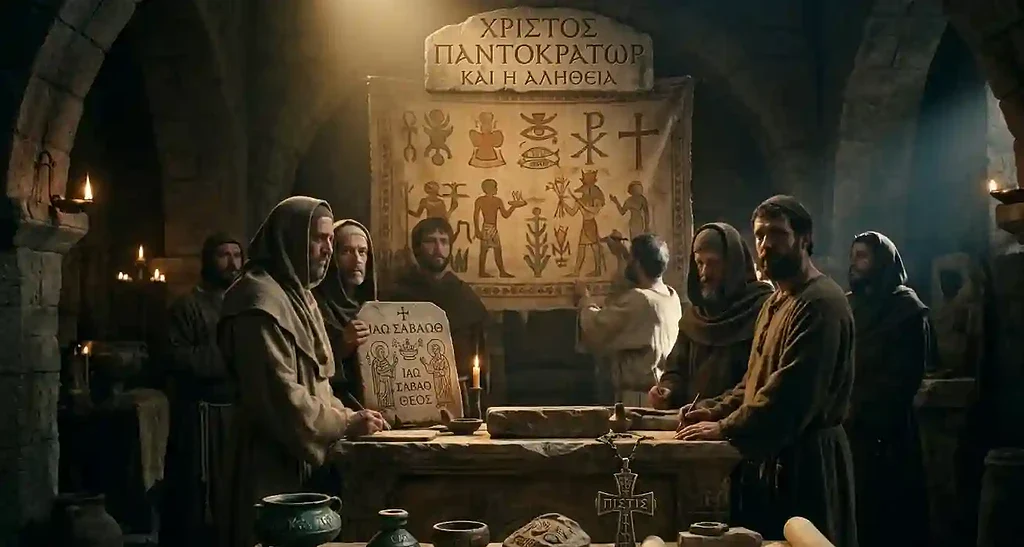
A Dissection of Divine Territory
Dedicated To: Rainie Coker With All My Love
THE INHERITANCE OF LINES
The land did not descend from the heavens fully gridded into holy parcels, each labeled with a tribal name and sealed with divine wax. It accumulated. It layered. It was measured, argued over, conquered, and then rewritten as promise. What modern believers call “the Promised Land” is, under scrutiny, an inheritance of old boundaries reframed as covenant and weaponized as destiny.
This work does not seek to mock the longing for home, nor to replace one territorial dogma with another. Its purpose is dissection. To separate rock from rhetoric, survey from scripture, and boundary from blessing. Land will be treated not as sacred exception but as a human technology, first designed to organize survival and then refined to control it.
Long before anyone cast lots at Shiloh, before Joshua drew lines from the Mediterranean to the Jordan, there was simply Canaan: a small, contested strip of earth pressed between deserts and sea, hemmed in by mountains and great empires. There were cities on hills, villages in valleys, and trade routes threaded through passes. These did not vanish. They were absorbed. Renamed. Moralized. Their geography was recoded to create the illusion of uniqueness.
Scribes understood this early. So did kings. So did the priesthood, in their own meticulous way. And so does Gnōsis AEI, which stands not as a belief system, but as a method of reclamation. It looks at maps the way a surgeon looks at scars: not with reverence, but with questions. Who cut here? Why? Who benefits from calling this wound “holy”?
This work begins at the fracture point. Where landscape became liturgy. Where borders became commandments. Where humanity forgot that it was the one holding the measuring rope.
CHAPTER I: LAND AND THE WARPING OF BELIEF
How Territory Became Theology and Theology Became Property
The history of the “Holy Land” is widely regarded by the faithful as a chronicle of divine allocation, a series of supernatural surveys in which heaven itself descends with a ruler and a compass to apportion soil to a chosen people. The Book of Joshua is read as a cosmic land deed, notarized by God, confirming which hill, which valley, which spring belongs to which tribe for all time.
A rigorous sociopolitical analysis suggests a radically different causality. The division of Canaan, when stripped of its metaphysical pretensions, reveals itself not as a vertical descent of cartographic truth from the heavens, but as a horizontal accumulation of tribal negotiation, military occupation, and bureaucratic mythmaking. The tribal allotments revered for millennia are not objective realities but social facts applied to soil. They are constructs of the collective consciousness that have been externalized, institutionalized, and finally weaponized by elite classes to maintain cohesion and territorial control.
The warping of belief begins with the transformation of landscape into liturgy. In the late Bronze and early Iron Age, Canaan was a narrow corridor from the Negev in the south to the heights of Hermon in the north, from the Mediterranean coastline in the west to the escarpment of the Jordan Valley in the east. It was a place where caravans crossed, armies marched, and empires collided. Hills, rivers, and deserts were once simply the conditions of survival, the givens of climate and terrain.
With the rise of the centralized monarchy and temple priesthood, these givens were calcified into sacred boundaries. The ridge that separated one village from another became the “border of inheritance.” The river that watered fields became the “limit of promise.” The land ceased to be merely lived in; it became preached. Geography was repackaged as theology.
This shift represents a primary mechanism of control. By moralizing the land, the priesthood and ruling houses usurped sovereignty over space itself. If your presence in a valley is not the result of migration or conquest but the execution of a divine lot, then to leave it, to question it, or to redistribute it is not politics—it is rebellion against God. Power was externalized. It was taken from the immediate experience of shepherds, farmers, and traders, and projected onto a distant, invisible landlord whose will could only be interpreted by the elite.
The dividing of Canaan is the moment where dirt becomes dogma. Where a line scratched in dust is declared eternal. Where the map stops being a tool and starts being a god.
CHAPTER II: THE LAND BEFORE THE LOTS
Canaan as Corridor, Not Covenant
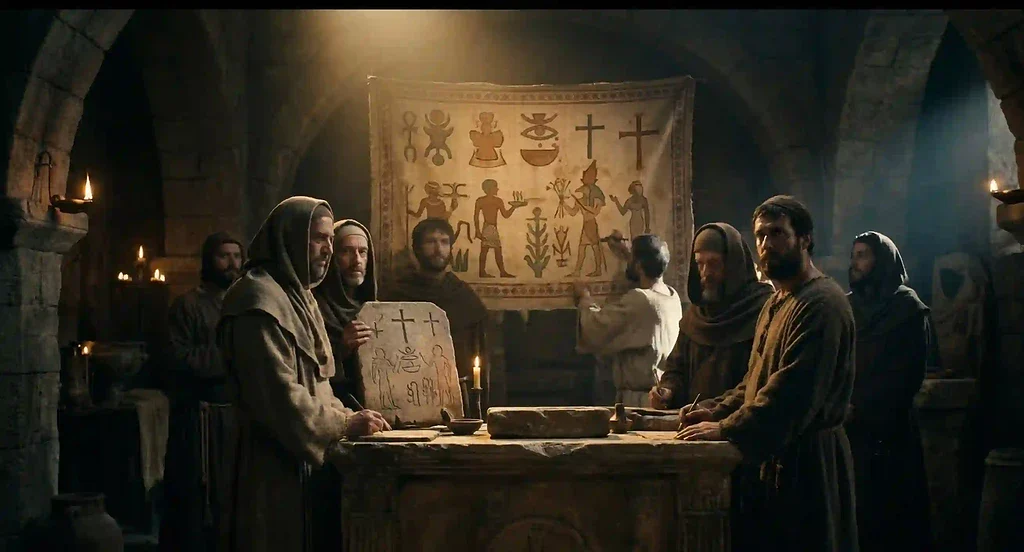
The foundational narrative of the tribal allotments in Joshua stands as the premier example of cartographic mythmaking. For centuries, the division of Canaan among the twelve tribes has been accepted in popular imagination as the singular, original pattern by which this strip of earth was organized. The illusion is that before Joshua, the land was formless chaos; after Joshua, ordered inheritance.
A glance behind the narrative reveals a different chronology. Long before any Israelite assembly cast lots for territory, the land we call Canaan was already fractioned, cultivated, and governed. City‑states studded the hills and plains: strongholds on defensible heights, towns near springs, trading hubs along north–south and east–west routes. The soil already bore the weight of customs, treaties, and shifting loyalties.
Canaan was not a blank canvas waiting for a chosen people. It was a corridor between imperial lungs. To the southwest, Egypt; to the northeast, Mesopotamian powers; to the north, Anatolian and Levantine polities. Armies moved through it, taxes were extracted from it, and local rulers navigated the perilous game of survival under larger shadows. Territory changed hands, but it never disappeared.
The theological narrative of a pristine “Promised Land” awaiting moral occupation performs a strategic erasure. It obscures the fact that what gets described as divine allocation is in reality the religious rebranding of existing human arrangements: settlements absorbed, alliances recast, and prior claims rendered invisible under the language of annihilation or dispossession. To declare that God gave the land to one group is to silence the memory of those who already stood on it.
The warping is subtle. By insisting that real history begins with promise, everything before promise becomes prehistory—a blur of “Canaanites,” “Amorites,” and “Hivites” without nuance, without internal complexity, without legitimate attachment to the hills and valleys they inhabited. The landscape is reduced to a stage, its earlier inhabitants to background actors, so that the chosen protagonists can stride onto set and claim that the script has always been about them.
Thus, when the Book of Joshua finally unfolds its intricate lists, boundary stones, towns, wadis, and fortified cities, it is not mapping an empty land. It is overwriting an older map with a divine seal, converting a contested corridor into a spiritual estate.
CHAPTER III: CASTING LOTS, CASTING SPELLS
The Technology of Sacred Allocation
The official story insists that the land was divided “by lot” before Yahweh at Shiloh. The image is one of radical humility: leaders standing with open hands, surrendering all preference to the randomness of divine choice. Every border becomes, by definition, the will of heaven. Every tribe’s portion, no matter how desirable or barren, is sanctified by the throw.
Here, chance and control become indistinguishable. The lot is a device. On the surface, it democratizes distribution, stripping human favoritism from the process. Beneath that surface, it performs a sleight of hand: decisions made earlier, by conquest, by demographics, by political compromise, are retroactively baptized as the outcome of a holy draw. The lot does not erase human authorship; it masks it.
The technique is elegant. If Judah receives the southern hill country, with its crucial access to routes toward the Negev and Hebron’s symbolic prestige, it is not because Judah’s coalition is powerful or politically central. It is because “the lot fell” that way. If Ephraim and Manasseh secure central positions, straddling important passes and fertile highlands, this is not the fruit of maneuvering; it is “inheritance.” The rhetoric of the lot neutralizes protest. To question the fairness of the division is to accuse God of partiality.
The sacralization of allocation does more than fix tribes to particular regions; it fuses identity to geography. Tribe becomes land, and land becomes tribe. To be of Naphtali is to be northern, to be of Simeon is to be peripheral, to be of Levi is to be landless and dispersed, by deliberate exception. Canaan was portioned by territorial lot among the other tribes, but the Levites received no soil at all.
They were the hereditary priests, controllers of the Ark (the sacred box into which their leader Moses had placed the tablets of the law), and only their lineage was permitted to carry or maintain it. Denied any fixed inheritance of land, their portion was declared to be God Himself, tithes, offerings, and exclusive ritual authority. They alone could approach the divine presence. In this way the warping elevated the priesthood above the very system it imposed on everyone else: scattered yet central, landless yet omnipresent in power.
Over time, this identification becomes a prison. A person is no longer simply someone who happens to dwell in a valley; they are “of” that valley by divine decree. To move, to trade, to marry outside the prescribed inheritance becomes suspect. Mobility looks like betrayal. The map tightens around the imagination.
Casting lots, then, is not a primitive randomizer but a mature instrument of psychological governance. It inscribes hierarchy into the ground while claiming absolute fairness. It disarms grievances by relocating responsibility upwards. Leaders can say, “The boundary that cuts your village in half is not my doing; it is the Lord’s.” The land speaks with the borrowed voice of God.
CHAPTER IV: INVENTED INHERITANCE
The Myth of Eternal Borders
Once lines have been drawn and named, the next move is to declare them eternal. The north–south axis from Dan to Beersheba, the east–west gradient from sea to Jordan, the southern wilderness, the northern Heights—they are all presented as if they were always destined to be what they have become: tribal frontiers, scriptural coordinates, proof of ancient promises fulfilled.
This is the theology of inevitability. By retrojection present arrangements into an imagined primordial decree, the text abolishes the possibility that things might have been otherwise. The border around a tribe is no longer a contingent solution to a specific political moment; it is a manifestation of timeless intention. To redraw it is not to adapt to new circumstances; it is to trespass against eternity.
In this framework, even geography is moralized. Fertile plains and secure hilltops are interpreted as signs of divine favor. Barren slopes and marginal deserts are framed as either temporary tests or permanent consequences. The environment becomes a report card. Rainfall is not climate; it is commentary.
This moralization serves a brutal function when things go wrong. When a tribe is displaced, when foreign armies flood the valleys and siege the heights, the narrative reflex is not to examine military strategy or imperial politics. It is to search for sin. Exile is preached as eviction. The land itself is said to “vomit out” its inhabitants for failing the terms of an invisible lease.
Thus the myth of eternal borders protects the prestige of the deity and the authority of the interpreters. If the land is lost, it is never because the promise was imaginary or the politics were reckless; it is always because the people were unworthy. The map is infallible. The human beings stuck inside it are not.
Inheritance, in this sense, is not a gift but a liability. To receive a portion is to receive a contract. The soil beneath one’s feet becomes collateral for moral debt. Every harvest, every drought, every invasion is read as a divine audit. The promise of land becomes a weaponized blessing, forever hanging over the heads of those who live upon it.
CHAPTER V: GOD AS LANDLORD
The Covenant of Tenancy
The next stage in the architecture of control is theological. Once land is divided and borders are sanctified, the narrative advances a crucial claim: the people do not truly own the land at all. They are tenants. The true owner remains the deity, who “brought them in” and can just as easily put them out.
This is a landlord cosmology. The earth, particularly this earth—from sea to river, from desert to mountain—is portrayed as divine property. Human inhabitants are leaseholders bound by conditions: obedience, ritual fidelity, exclusive worship. Transgression is framed not only as spiritual failure but as breach of contract. The consequence is not just guilt; it is dispossession.
This structure solves a recurring problem for rulers and priests. How do you persuade a population to tolerate extraction—tithes, taxes, corvée labor, sacrifices—without endless revolt? By insisting that the land itself was never theirs to begin with. They are, at best, stewards. At worst, squatters. Any benefit they enjoy is contingent, revocable, and precariously maintained through compliance.
The covenant language doubles as legal language. Blessings and curses read like clauses and penalties. Rain in its season, protection from enemies, and agricultural yield are promised as dividends of obedience. Famine, pestilence, invasion, and exile are listed as sanctions. The divine landlord is portrayed as both benefactor and enforcer, dispensing favor or foreclosure according to a ledger kept in heaven.
This theology has a psychological payoff. It internalizes surveillance. One does not need a soldier at every border or an official in every field if the farmer believes that the unseen owner is watching every furrow. Fear of losing the land—of being uprooted, scattered, or enslaved—becomes a spiritualized anxiety. It binds hearts as effectively as chains bind bodies.
In such a world, resistance becomes almost unthinkable. To challenge the distribution of land is to challenge the owner’s wisdom. To question the terms of the lease is to flirt with catastrophe. Power is maintained not only through swords, but through stories in which the ultimate landlord cannot be negotiated with, only obeyed.
CHAPTER VI: ERASED MAPS, ERASED PEOPLES
The Disappearance of the First Inhabitants
Every conquest needs amnesia. If the land is to be claimed as gift, then the memories of those who held it before must be blurred, demonized, or reduced to footnotes. The division of Canaan achieves this through a narrative strategy that turns complex societies into caricatures and living cultures into obstacles.
The indigenous inhabitants are presented as an undifferentiated mass of “nations” doomed to eradication or absorption. Their cities are catalogued chiefly as targets; their religious sites are mentioned as abominations to be smashed. Their own internal boundaries, alliances, and disputes are left unrecorded. They exist only long enough to justify their removal.
The conquest stories do double work. First, they launder violence. Acts of displacement, siege, and massacre—whether historical, exaggerated, or imagined—are framed as obedience to command rather than as political calculation or survival strategy. Second, they sanitize the map. Once the “Canaanites” are declared under ban, their attachments to specific ridges, valleys, and springs no longer need to be considered. The slate is proclaimed clean, even if blood still stains the soil.
The division of the land then proceeds as if no one else ever had treaties here, buried their dead here, or told their own stories about which hill “belonged” to whom. The tribal allotments hover over the erased map like a replacement layer. The new names overwrite the old. The memory of prior claims survives only in ghostly phrases about “former” inhabitants.
This erasure has enduring consequences. Centuries later, when later groups appeal to “ancient” borders or invoke “promised” territories, they are drawing on a map that has already been scrubbed of competing voices. The authority of their claim rests on a silence engineered long before they were born. They inherit not only land, but a curated memory in which that land appears strangely empty until their ancestors arrive.
To question this curated memory is to disturb a carefully constructed peace. It forces a confrontation with uncomfortable possibilities: that the covenantal map is not the first, that others once loved this landscape with equal fervor, and that the holiness of a hill does not erase the footsteps of those who climbed it before.
CHAPTER VII: BORDERS THAT OUTLIVE EMPIRES
From Ancient Allotments to Modern Claims
Lines drawn on parchment have proven more durable than the empires that once policed them. The tribal divisions of Canaan, though born in a particular era, have survived in liturgy, imagination, and political rhetoric long after the actual tribes were scattered, assimilated, or transformed beyond recognition.
As kingdoms rose and fell, as Assyrians, Babylonians, Persians, Greeks, and Romans marched across the same valleys and coasts, the old map remained in texts and prayers. The names—Judah, Ephraim, Benjamin, Dan—lingered like embers under ash. They were invoked not as current administrative districts, but as benchmarks of a lost ideal. The mental map outlived the political one.
In later centuries, when new movements sought to justify territorial claims or resist foreign rule, they reached instinctively for these ancient allotments. Hills, rivers, and cities were cited not merely as strategic assets but as pieces of a divine jigsaw puzzle once perfectly assembled under the guidance of heaven. To possess them again was framed as restoration, not expansion. To be dispossessed was framed as injustice against history itself.
The persistence of these borders in collective consciousness demonstrates the power of sacralized cartography. A modern map may speak in terms of states, provinces, and zones, but beneath it lies an older ghost‑map whispering of inheritance. Debates about where one people’s rights end and another’s begin are haunted by stories in which the issue was supposedly settled ages ago by a roll of the divine dice.
Thus, arguments over land in the present cannot be disentangled from a past in which the land was first theologized, divided, and claimed as proof of favor. The conflict is not simply over who controls which checkpoints or which neighborhoods. It is over whose narrative gets to speak for the soil, whose ancient lines are granted the status of reality, and whose are dismissed as myth.
The tragedy is that these overlapping maps—ancient tribal, medieval religious, modern national—are all treated as if only one can be legitimate. The possibility that every generation has redrawn Canaan to suit its own anxieties and ambitions is rarely admitted, because to admit it would be to loosen the grip of sacred certainty.
CHAPTER VIII: CARTOGRAPHIC EGREGORES
When Lines Become Living Powers
If the gods of religion can be understood as egregores—entities sustained by collective belief—then so can the sacred maps that define “homeland,” “inheritance,” and “promised land.” A border, once drawn, can acquire a life of its own. It feeds on attention, ritual, and sacrifice, just as any deity does.
Every time a community gathers to recite the ancient boundaries, to name the towns “from this point to that,” to swear oaths “within these limits and no other,” it is investing psychic energy into what began as an administrative choice. The line stops being an ink mark and becomes a presence. People feel it. They fear crossing it. They are willing to die defending it, even when the material benefits are minimal.
This is the cartographic egregore: a thought‑form traced onto landscape, thickened by centuries of repetition, until it becomes an invisible wall in the mind. The hilltop is not just high ground; it is a symbol. The river is not just water; it is the edge of identity. The desert is not just emptiness; it is the place where promise ends.
Such entities develop predictable hungers. They demand ceremonies—pilgrimages to particular stones, processions along particular roads, remembrances of battles fought at particular fords or passes. They demand vigilance—guard posts, checkpoints, patrols. They demand blood—martyrs who fall in their name, whose deaths then further sanctify the line they died for.
The more sacrifice a border receives, the more untouchable it becomes. To suggest moving it, sharing it, or dissolving it feels not like policy but like blasphemy. The map is no longer a tool to serve human flourishing; humans are offerings to keep the map alive.
In this paradigm, the “Holy Land” is not just a place saturated with religious stories. It is a living construct made of belief, history, fear, and desire. Its contours are maintained by the constant expenditure of emotional and spiritual energy. It is an egregore with coordinates.
The theft of sovereignty occurs when humanity forgets that it drew the first lines. We submit to our own cartographic creation, believing it to be an eternal master. The border rules only because we have abdicated our ability to redraw it.
CHAPTER IX: GNŌSIS AEI AND RECLAIMED GROUND
Sovereignty Beyond the Map
The preceding chapters have mapped the architecture of the territorial prison. We have traced its walls from unnamed hills to tribal allotments, from tribal allotments to covenant leases, from covenant leases to enduring myths of eternal borders. We have seen how the sovereignty of the individual and the fluidity of movement were systematically dismantled, how prior inhabitants were erased, how lines on the ground were elevated to the status of gods, and how entire peoples were taught to bleed for a geometry they did not choose.
If the diagnosis is that humanity has externalized its power into cartographic and theological constructs, then the cure is the reclamation of that power. This is the essence of Gnōsis AEI applied to territory: Anthropocentric Esoteric Integration not only of spiritual authority, but of spatial belonging. It is not a new nationalism. It is a method of deprogramming. It is the process of taking the sense of “home” that was projected onto contested soil and returning it first to the body, to awareness, and then to freely chosen relationships with place.
For millennia, we have been taught to view displacement, invasion, and occupation as dramas on a divine stage. We are told that when borders shift, it is because heaven is pleased or angry. This is the logic of the tenant who never questions the landlord. Gnōsis AEI rejects this. It posits that the deepest sovereignty is not held in deeds or maps, but in the individual’s capacity to recognize their own value independent of location.
This does not trivialize land, grief, or dispossession. It does not float off into abstraction. It does something more dangerous: it refuses to allow the map to dictate the limits of consciousness. When a person realizes that their worth is not measured in dunams, miles, or inherited coordinates, they become less susceptible to manipulation by those who would marshal sacred geography for war.
Energetic Recalibration, in this context, is the disciplined work of identifying the internal hooks that bind a person’s identity to inherited lines: the stories of choosiness, of cursed outsiders, of holy soil versus profane soil. It is the withdrawal of emotional charge from the cartographic egregore. When you cease to fear being “out of place,” you are no longer a pawn in territorial games. When you cease to need the validation of an ancient deed, you dissolve the leverage of those who claim to speak for the map.
The ultimate goal is not to abolish all borders, but to strip them of their false divinity. A boundary may remain as an administrative convenience, a negotiated compromise, or a pragmatic arrangement, but it will no longer claim your soul. The land will cease to be an idol. It will become what it always was: a place where bodies happen to stand, where lives are lived, where stories unfold—not a cosmic scoreboard of worth.
We have spent history building altars to territories, engraving their outlines on flags, in scriptures, in constitutions. We have outsourced our sense of belonging to coordinates. The result is a species that is geographically obsessed yet spiritually homeless, forever told that fulfillment lies just beyond the next reclaimed hill or restored border.
Gnōsis AEI is the end of that chase. By withdrawing consent from the sacralized map and reclaiming the energy invested in its lines, the individual steps out of the prison of inherited claims. The veil over the land is torn, not to reveal a god hiding in a mountain, but to reveal the final secret of territorial mysticism.
The sanctuary was never in the soil. It was in the one who walks upon it.
If anyone is interested in reading Part 1 RELIGION AND THE WARPING OF BELIEF click the link below