

Lilith: Origins, Myth, Symbolism, and Spiritual Meaning
Lilith origins reveal an ancient demoness from Mesopotamia. Lilith is one of the most misunderstood and magnetic figures in occult and religious discourse. She appears at the crossroads of ancient Near Eastern demonology, Jewish folklore, medieval myth, and modern spiritual reclamation, making her less a single fixed being than a layered figure whose meaning changed across centuries.
For some, Lilith represents danger, wilderness, and the untamed night. For others, she has become a symbol of sovereignty, erotic power, refusal of domination, shadow work, and uncompromising feminine independence. Both views exist because Lilith’s story did not emerge all at once; it accumulated through different cultures, texts, and interpretations.
This guide explores Lilith from several angles: her earliest roots, her biblical and folkloric appearances, her role in Jewish legend, her occult symbolism, and the reasons she remains so compelling to modern practitioners. The goal is not to flatten her into a simple “goddess of this” or “demon of that,” but to understand why she endures.
Who Is Lilith?
Lilith origins trace back to ancient Mesopotamia Lilith is most commonly known in later Jewish folklore as a female night demon and, in medieval legend, as Adam’s first wife who refused submission and departed Eden. That familiar version is widespread today, but it is not the earliest layer of her tradition and should be treated as a later development rather than the original source of the figure.
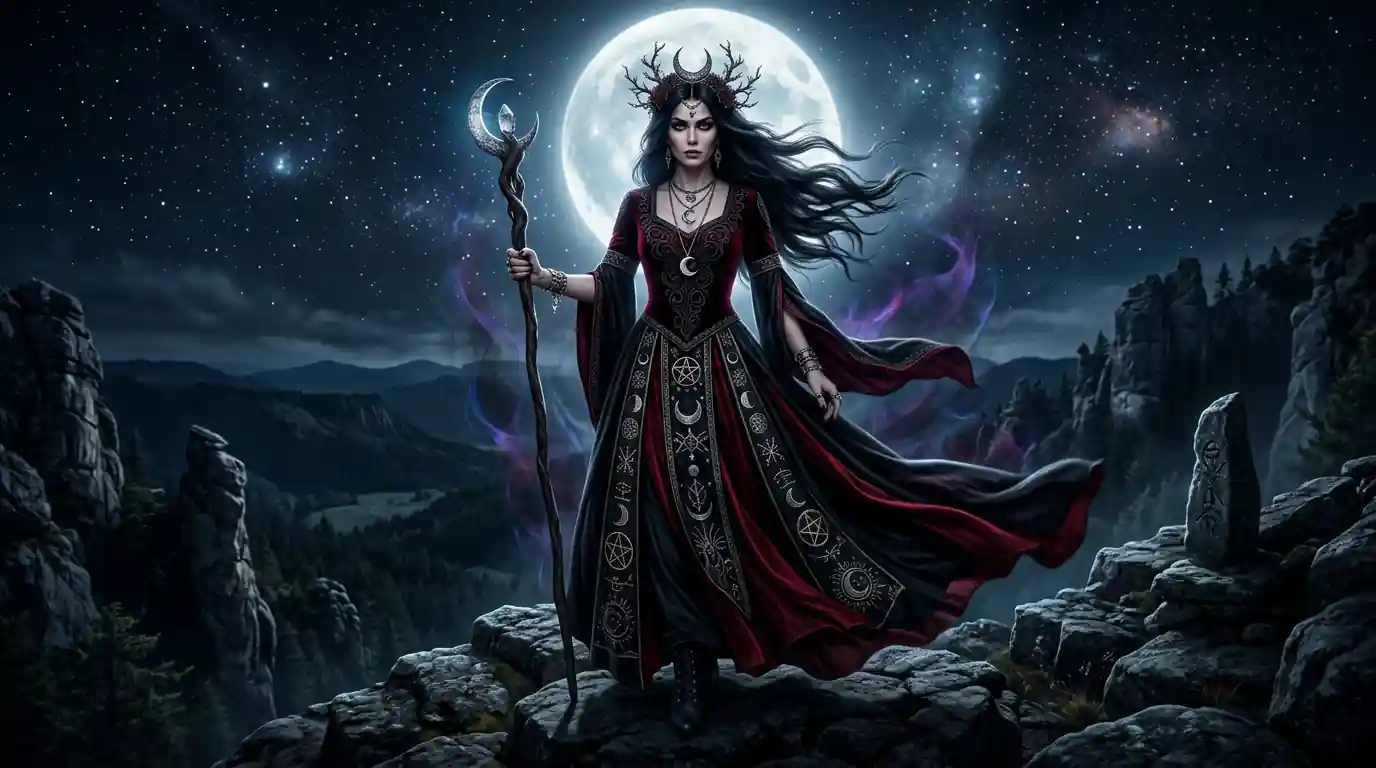
Lilith origins begin in Sumerian wind demon myths. Britannica traces Lilith’s name and character to Mesopotamian demon traditions connected with lilu or lilitu, terms associated with night spirits. In Jewish folklore, she later became linked with danger to infants, women in childbirth, and nocturnal seduction, with protective amulets used against her influence.
Over time, Lilith expanded from a threatening night being into a mythic symbol that could carry spiritual, social, and psychological meanings. That evolution is one reason she appears so differently in academic writing, folklore studies, occult books, and modern devotional spaces.
Earliest Lilith Origins
The oldest background for Lilith is usually sought in ancient Mesopotamian material rather than in Genesis. Scholarly summaries commonly connect her to classes of spirits or demons named lilu and lilitu, which were associated with the night and with harmful supernatural activity.
This matters because it places Lilith’s roots in a wider Near Eastern world of desert beings, night entities, and liminal powers rather than beginning her story as a biblical rebel. The later image of Lilith as a fully personalized figure developed gradually from that older demonological background.
When people say Lilith is “older than the Bible,” they are usually pointing to these Mesopotamian antecedents. That claim is broadly fair in cultural terms, though it is more accurate to say that the traditions behind Lilith predate her later Jewish legendary form.
Lilith in the Bible
Understanding Lilith origins helps clarify her biblical appearance Lilith is often discussed in connection with Isaiah 34:14, a verse describing a devastated and haunted landscape. Some translations render the Hebrew term as “Lilith,” while others translate it more generically as a night creature, night monster, or screech owl, showing that the verse is real but the translation is debated.
That passage does not present the fully developed medieval story of Lilith as Adam’s first wife. Instead, it places a night-being or desolation-creature within a prophetic vision of ruin, wilderness, and abandonment.
Because of that, Isaiah 34:14 is important but limited. It supports the presence of a Lilith-like night entity in biblical tradition, yet it does not by itself prove the later popular narrative many people now associate with her.
Lilith as Adam’s First Wife
Lilith origins as Adam’s first wife appear in medieval Jewish folklore like the Alphabet of Sirach The famous story of Lilith as Adam’s first wife comes from later Jewish folklore, especially the medieval Alphabet of Ben Sira, not from Genesis itself. In that tradition, Lilith and Adam are created from the same earth, Lilith refuses subordination, speaks the divine name, and leaves Eden rather than submit.
This version became enormously influential in later imagination because it gave Lilith a dramatic personality: proud, sexually autonomous, defiant, and impossible to domesticate. It also helped transform her from a dangerous night spirit into a figure with narrative agency and symbolic depth.
At the same time, scholars note that The Alphabet of Ben Sira may contain satirical or playful elements, so it should not be treated as straightforward scripture or simple historical doctrine. That does not make the story unimportant; it means the text should be read with genre awareness.
Lilith in Jewish Folklore
Lilith origins in Mesopotamian myths evolved into Jewish folklore as a child-threatening demon. In rabbinic and folkloric material, Lilith is associated with erotic danger, infant mortality, and threats surrounding childbirth. Britannica notes that amulets bearing angelic names were used to ward her off, showing that belief in her harmful power had practical folk expression rather than existing only in abstract storytelling.
This strand of the tradition reveals Lilith as a being of vulnerability and threshold spaces: the bedroom, the birthing room, the wilderness, and the night. She belongs to areas where order weakens and fear, desire, and uncertainty intensify.
That older folkloric Lilith is not a modern empowerment icon. She is frightening, transgressive, and disruptive, which is important to remember when interpreting her through a contemporary spiritual lens.
Lilith in Modern Spirituality
Modern occult and spiritual communities often approach Lilith very differently from earlier folklore. Instead of treating her only as a malevolent being, many now view her as an emblem of autonomy, sexual sovereignty, shadow integration, boundary-setting, and the refusal to be spiritually or socially diminished.
This modern reading draws heavily on the medieval first-wife legend, especially the idea that Lilith rejected hierarchy and exile became the price of self-possession. Contemporary seekers often resonate with that image because it speaks to liberation, rage, desire, and the recovery of disowned parts of the self.
Even so, it is wise to be honest about the distinction between historical source material and present-day practice. The historical Lilith of folklore was largely feared and warded against, while the modern Lilith of occult devotion is often approached as a teacher, initiatrix, or force of empowerment.
Symbolism of Lilith
Lilith origins symbolize rebellion and feminine power from Sumerian demons to Adam’s defiant wife.. Lilith is commonly linked with the night, the moonless threshold, the desert, forbidden knowledge, erotic power, and the shadow self. These associations arise less from one single canonical text than from the cumulative atmosphere of her traditions: wilderness, danger, refusal, seduction, exile, and untamed feminine force.
Psychologically, Lilith can symbolize the parts of the self that reject domination and refuse false harmony. Spiritually, she is often approached as a figure of confrontation, bringing hidden desire, buried anger, autonomy issues, and taboo truths to the surface.
This is why Lilith work is so often described as intense. Her symbolism does not usually point toward comfort, obedience, or soft reassurance; it points toward honesty, severance, magnetism, and transformation through confrontation.
Why Lilith Still Matters
Lilith remains powerful because she sits where religion, myth, sexuality, fear, and freedom all meet. She can be read as a demonized woman, a night spirit, a warning figure, a feminist icon, a shadow archetype, or a spirit of revolt depending on the tradition and the reader.
Her endurance comes from that flexibility. Every age seems to find in Lilith a way to talk about what it fears, what it suppresses, and what it cannot fully control.
For occult practitioners, that makes Lilith especially compelling. She is not a flat symbol of rebellion for rebellion’s sake; she is a mirror for power, cost, appetite, exile, and self-ownership.
Working With Lilith Carefully
Anyone drawn to Lilith should approach her with clarity and discernment rather than fantasy. Historically, the source tradition is complex and often hostile toward her, while modern spiritual work with Lilith is interpretive and experiential rather than rooted in a single uncontested ritual canon.
A grounded path is to begin with study before devotion: learn the Mesopotamian background, read Isaiah 34:14 in multiple translations, understand the role of The Alphabet of Ben Sira, and then decide what Lilith means within your own practice. That kind of layered approach prevents shallow myth recycling and builds a stronger relationship with the current behind the name.
Practitioners who do engage Lilith often frame the work around shadow work, liberation, boundaries, sexuality, truth-telling, and reclaiming rejected aspects of the self. Because those themes can be psychologically intense, discernment, protection, and honest self-observation are essential.
Frequently Asked Questions About Lilith origins
Is Lilith in the Bible?
Lilith is commonly connected to Isaiah 34:14, though translations vary between rendering the word as Lilith, night creature, or a similar term. The verse exists, but its exact translation is debated.
Was Lilith really Adam’s first wife?
That story comes from later Jewish folklore, especially the medieval Alphabet of Ben Sira, not from the book of Genesis itself. It is influential, but it is not a Genesis narrative.
Is Lilith a demon or a goddess?
Historically, Lilith is more strongly attested in demonological and folkloric traditions than as an ancient goddess in a clear canonical sense. In modern spiritual practice, however, some people treat her as a divine feminine or initiatory presence.
Why do modern witches work with Lilith?
Modern practitioners are often drawn to Lilith as a symbol or presence connected with sovereignty, shadow work, erotic power, independence, and refusal of domination. That modern approach reflects contemporary occult interpretation more than older Jewish folklore.
Is Lilith dangerous?
In older folklore, Lilith is presented as dangerous and protective measures were used against her. In modern practice, many people describe her energy as intense rather than simply harmful, especially when the work touches fear, desire, trauma, or personal autonomy.